Pluteus concentricus E. Horak
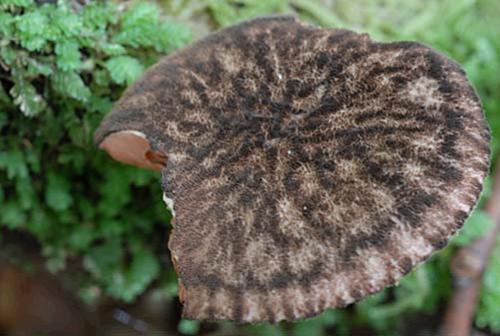
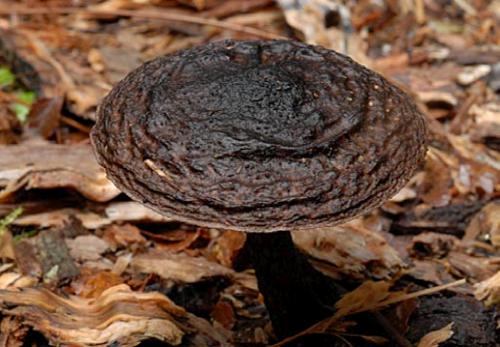
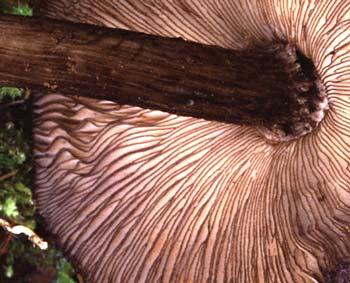
This species is quite large, with some specimens being 100 mm in diam. They have conspicuous concentric ‘wrinkles’ on the cap. The pink gills have a dark edge to them.
Found in beech forests.
Pluteus
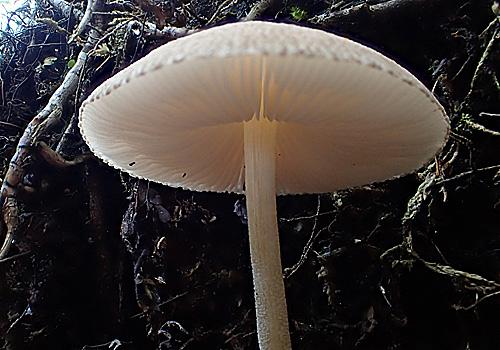
This genus is always found on wood where specimens are usually growing singly. The gills are pinkish when young and the spore print is pink. The caps are dark and felty. Fifteen species have been described in NZ. Microscopic examination is required to distinguish some species.
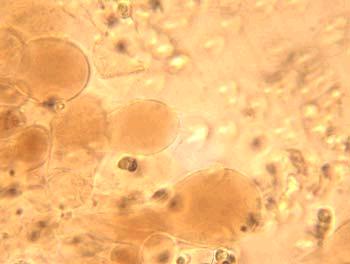
These large brown cells along the gill edge are known as cheilocystidia. They are filled with a brown pigment.
Pluteus similis E. Horak
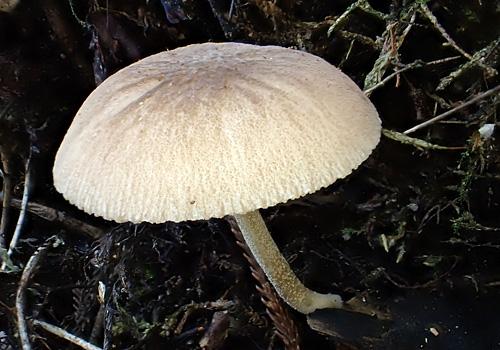
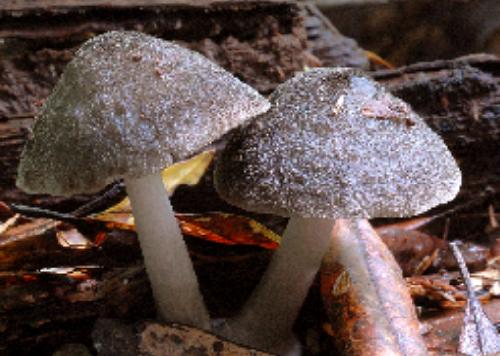
A grey species with a grey stipe. Cap diam: up to 100 mm. The gill edges are dark brown.
Found in mixed broadleaf-podocarp forest.
Pluteus velutinornatus G. Stev.
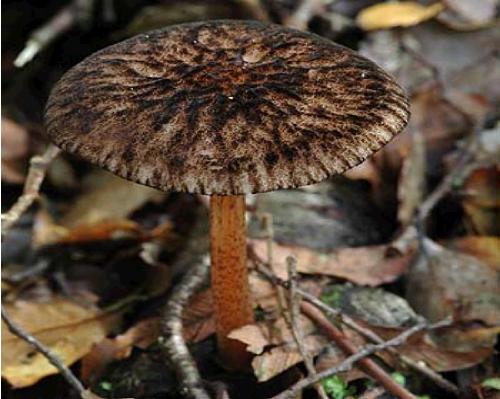
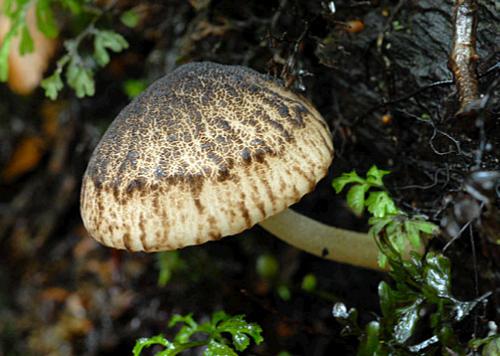
A fawn coloured cap covered in dark brown to black fibrils often forming a pattern radiating out from the centre. Cap diam: up to 60–70 mm.
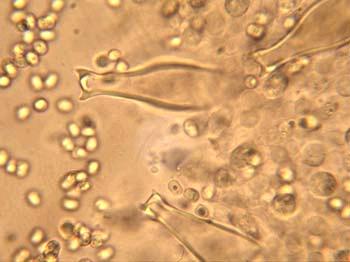
These thickwalled cells are found along the side of the gill and are known as pleurocystidia.
Note the 'hooks' that are on the the ends of the pleurocystidia.
Pluteus readiarum G. Stev.
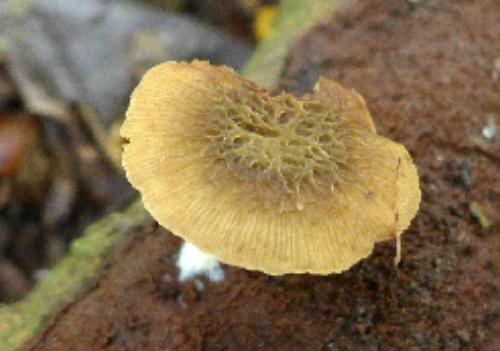
This species is found in beech and broadleaf forests. The cap is a yellow-fawn colour covered with small dark brown velvety fibrils. Cap diam: up to 40 mm. The stipe is also yellowish.
Found in beech and broadleaf forests.
Pluteus minor G. Stev.
A paler species of Pluteus which is saprobic on fallen rotten wood of broadleaf trees.
Cap diam: 15–25 mm.
The stipe is whitish with a slightly swollen base.
Pluteus terricola E. Horak
A grey-brown to hazel-brown species. It is veined or wrinkled on the cap surface.
Cap diam: 20–40 mm. The stipe is white to pale grey.
Found in mixed broadleaf-podocarp and beech forests.
Pluteus perroseus E. Horak
Cap diam: 15–50 mm. The stipe is swollen towards the base.
Found in beech forests.
The gills have a conspicuous brown edge. This is caused by the large cells along the gill edge having brown pigment in them.